Nursing - Accelerated Second Degree (BSN)
Program Highlights
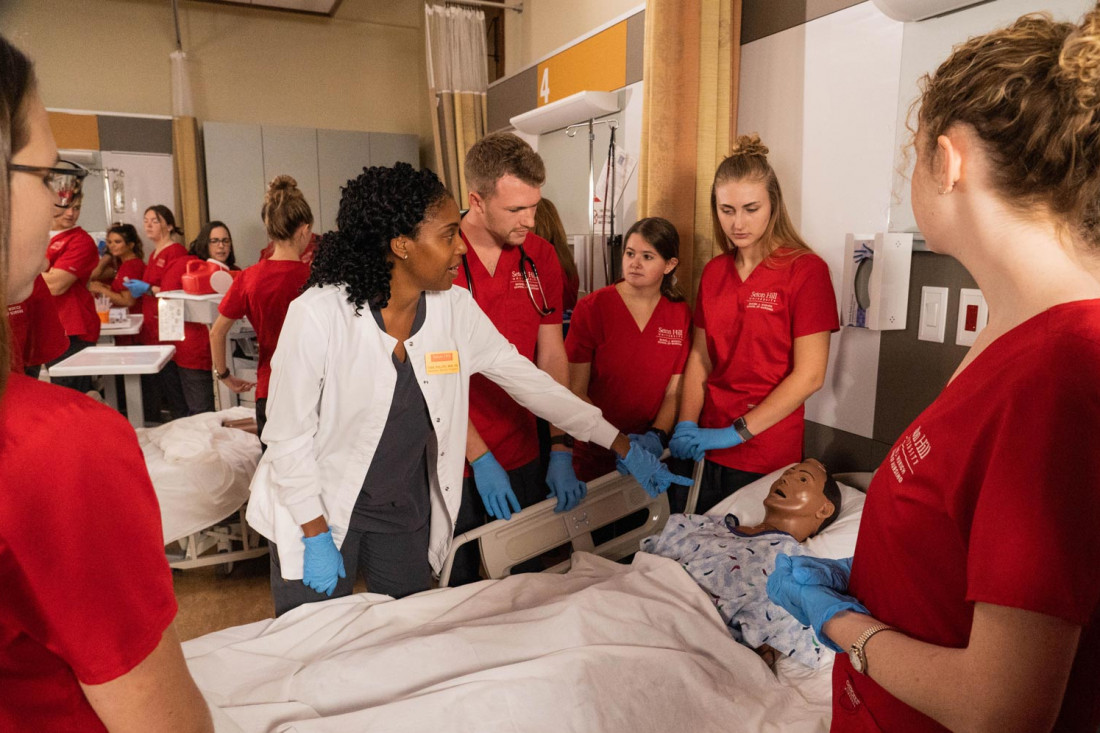
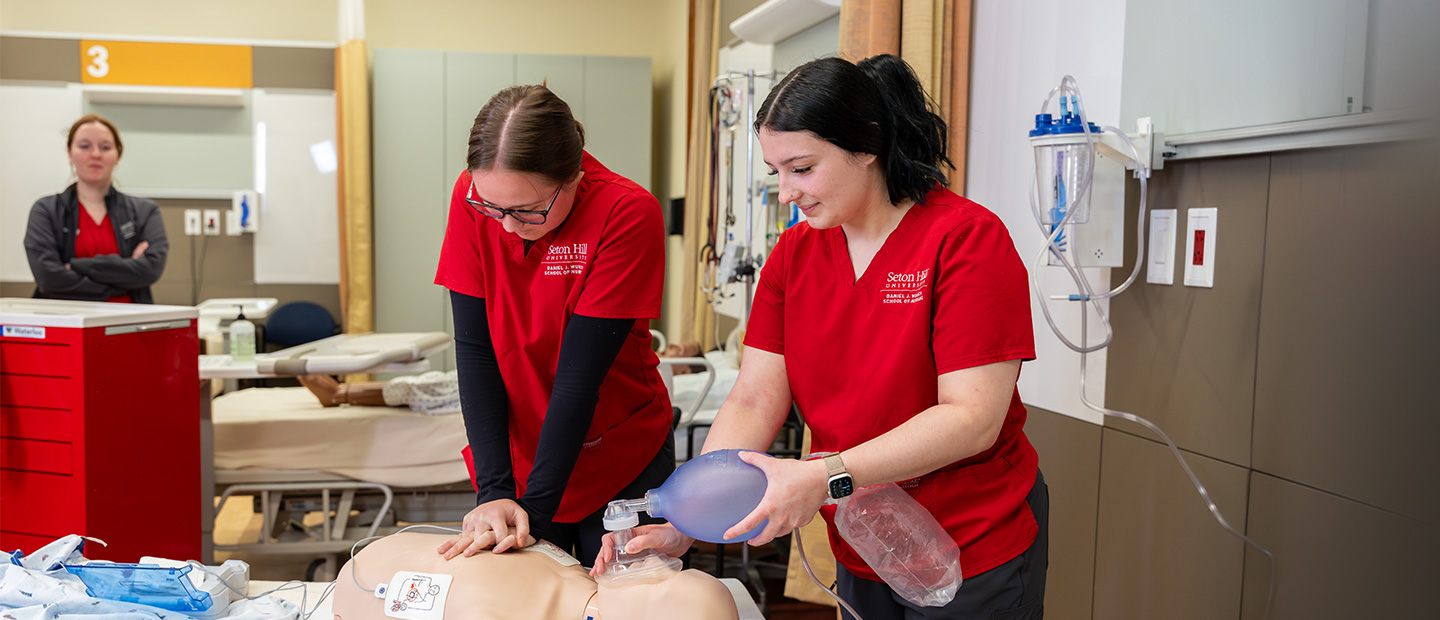
- Advanced Nursing Skills Lab and Simulation Suite
- PA State Board of Nursing Approved
Earn Your Accelerated BSN in Nursing
 Move Your Nursing Degree Forward Fast
Enjoy all the benefits of Seton Hill’s accredited BSN Program in an accelerated timeline. Designed just for students who’ve already earned a bachelor’s degree in a different field.
Why Choose Seton Hill for Your Accelerated Second Degree in Nursing?
Faster Path to Licensure
Seton Hill’s Accelerated BSN is designed to provide second-degree students with an efficient pathway into professional nursing. Seton Hill ABSN graduates enter the nursing workforce sooner.
Nationally Accredited Nursing Program
The baccalaureate degree program in nursing at Seton Hill University is accredited by the Commission on Collegiate Nursing Education (www.ccneaccreditation.org).
The Only ABSN Program in Westmoreland County
Seton Hill provides the only accelerated nursing pathway in the region. It gives local nursing students access to a fast-paced BSN without the heavy daily commute into downtown Pittsburgh or Oakland.
Top-Notch Facilities
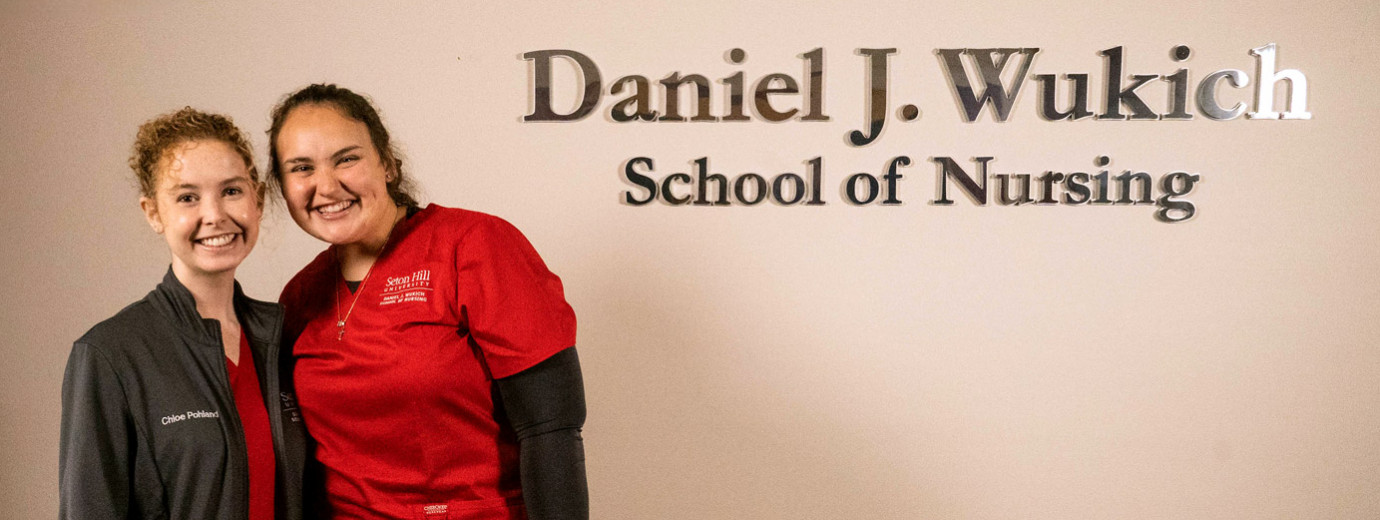
Seton Hill’s Daniel J. Wukich School of Nursing and Boyle Health Sciences Center will provide you with the best in academic, clinical and research facilities and resources.
The Nursing Skills Lab and Simulation Suite are state-of-the-art instructional facilities that provide students with the opportunity to translate theoretical knowledge into a safe clinical experience using realistic patient scenarios. High-fidelity manikins used in the laboratory are capable of numerous physiological states and responses, giving the student “real-life” experiences.
Partnership with All Three Regional Health Systems
- UPMC
- Allegheny Health Network (AHN)
- WVU Health System (Independence)
Integrated Health Sciences Ecosystem
Seton Hill has an established reputation in the health professions and natural sciences. Nursing isn't an isolated department; it benefits from interprofessional learning opportunities and shared health science faculty expertise. Other health and medical degree programs at Seton Hill include physician assistant, nutrition and dietetics, osteopathic medicine, dental medicine, pharmacy, audiology, optometry, physical therapy, occupational therapy, health science and exercise science.
Holistic and Values-Based Curriculum
Rooted in the Judeo-Christian tradition and the values of Elizabeth Ann Seton, the curriculum emphasizes compassionate, patient-centered care and ethical leadership alongside rigorous clinical training. Students learn to treat the whole person, not just a set of symptoms.
Small Class Sizes and Individualized Support from Expert Faculty
At Seton Hill, we keep our courses small by design. Here, you will enjoy personalized support from faculty who have practical nursing and healthcare experience.
Enhanced Career Opportunities
Upon completion of Seton Hill’s Nursing Program, you will be eligible to take the licensing examination (NCLEX) for professional registered nurses. As a graduate of this program you will be prepared to function as a professional nurse in a variety of healthcare settings.
According to the U.S. Bureau of Labor Statistics, employment opportunities for nurses will grow faster than the average for all occupations. Growth will occur for a number of reasons, including:
- An increased emphasis on preventive care.
- Growing rates of chronic conditions, such as diabetes and obesity.
- Demand for senior healthcare services as people live longer and more active lives.
The median annual pay for registered nurses in 2025 was $97,550.
Cost and Financial Support
Tuition
Seton Hill’s Accelerated Second Degree BSN is offered at the same tuition as all other traditional on-campus undergraduate programs.
Financial Support
While financial aid is not always available for second degrees, if you complete the Free Application for Federal Student Aid (FAFSA) and list Seton Hill as your school of choice you may be eligible for federal loans.
Private education healthcare loan options are available through ELMSelect.
Employer Reimbursement and Tuition Deferment
Seton Hill offers a tuition payment plan for students who receive tuition reimbursement from employers. This plan allows students to attend classes at Seton Hill University and defer payment of the tuition and fees until 45 days after grades are available. More information is available here.
Admission Requirements
In addition to Seton Hill University's general admission requirements, applicants seeking admission to the Accelerated BSN program must meet the following criteria:
Earned Baccalaureate Degree: Possession of a bachelor’s degree (BA or BS) from an accredited institution prior to the start of the program.
In-Progress Degrees: Applicants currently completing their initial baccalaureate degree may apply and receive conditional admission, provided official degree conferral occurs prior to the start of the program.
Academic GPA: A cumulative college GPA of 3.0 on a 4.0 scale is the standard for admission, based on coursework completed at all previously attended postsecondary institutions.
Science Course Performance: Demonstrated academic strength in prerequisite science coursework with a minimum cumulative science GPA of 3.0.
Academic Consideration: In evaluating academic readiness, the Nursing Program may give additional consideration to an applicant's recent academic performance, prerequisite science performance, and evidence of academic improvement when the cumulative GPA may not fully reflect the applicant's current academic ability.
Prerequisite Coursework
All prerequisite courses must be completed with a grade of "C" or higher prior to the start of the program. Prerequisite coursework may be completed at any accredited college or university (including approved online providers such as Portage Learning).
Completed within the last 5 to 7 years:
- Anatomy & Physiology I with Lab (4 credits) — SHL 214 & SHL 215 (Must be completed from the same institution)
- Anatomy & Physiology II with Lab (4 credits) — SHL 216 & SHL 217 (Must be completed from the same institution)
Completed within the last 10 years:
- General Chemistry with Lab (4 credits)
- Microbiology with Lab (4 credits) — SBL 218 & SBL 219
- General Biology I (3 credits) — SBL 150
- Lifespan Development (3 credits) — SPY 223 (Must cover human development from conception through death across psychological, cognitive, and psychosocial domains)
- Nutrition for Life (3 credits) — SNT 160 (Courses focused primarily on commercial weight loss, dieting, or weight management will not be accepted)
- Introduction to Statistics (3 credits) — SSS 150
On an individual basis, the Nursing Program may permit conditionally admitted students to complete a maximum of one (1) non-science prerequisite course as a co-requisite during their first semester (Spring) of enrollment.
- Approved Co-Requisites: Nutrition for Life (SNT 160), Lifespan Development (SPY 223), or Introduction to Statistics (SSS 150). Must be completed prior to enrollment in NU 315 Research & Evidence-Based Practice.
- Strict Prerequisites (No Co-Requisite Status): Due to clinical safety, foundational course sequencing, and heavy academic pacing, General Biology, Anatomy & Physiology I & II (with labs), General Chemistry (with lab), and Microbiology (with lab) must be completed prior to beginning nursing coursework and will not be approved as co-requisites.
All co-requisites must be successfully completed with a grade of "C" or higher by the end of the student's first semester to maintain progression in the nursing major.
Transfer of Nursing Coursework
- The School of Nursing will evaluate nursing coursework completed at another accredited institution on an individual basis for content equivalency, expected learning outcomes, and nursing standards.
- A grade of “B” or better is required for any transferred nursing course.
- Nursing courses completed three (3) or more years prior to the date of enrollment will not be accepted for transfer credit.
- Applicants must provide course syllabi upon request. At least 50% of the credits required for the nursing major must be completed at Seton Hill University. Transfer of non-nursing coursework must adhere to the Transfer of Coursework policy in the Seton Hill University Academic Catalog.
Clinical Compliance and State Board Disclaimers
- Clinical Requirements & Transportation: Students must complete physical examinations, fulfill immunization requirements, complete necessary background and clinical clearances, and carry appropriate insurance to participate in clinical practice experiences. Students are responsible for arranging their own transportation to and from all clinical sites.
- PA State Board of Nursing Legal Limitations: Applicants should be aware that the Pennsylvania State Board of Nursing reserves the right to deny a license to any candidate who has been convicted of any felonious act prior to entry or during the course of an educational program. Convictions include a judgment, an admission of guilt, a plea of nolo contendere, probation without verdict, or incomplete Accelerated Rehabilitative Disposition (ARD). Such convictions may render a graduate ineligible for RN licensure or employment. Questions regarding eligibility should be directed to the Program Director or the PA State Board of Nursing.
Faculty
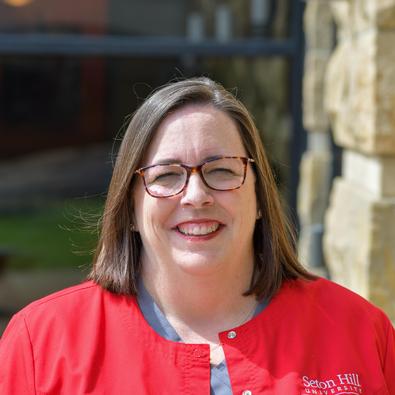
Diane Kondas
Program Director, Nursing; Assistant Professor

Andrea Berry, MSN, RN
Assistant Professor


Tara Phillips
MSN, RN
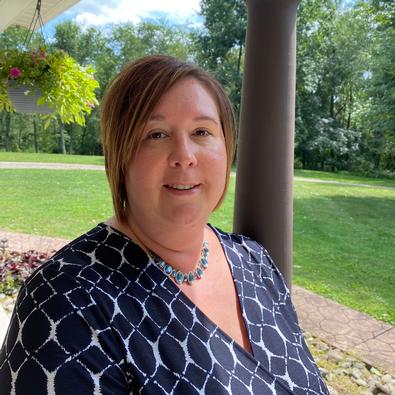
Carrie Slagle
Assistant Professor
Program News
View All News