Students Across Majors Discuss AI Implications at AI Ethics Bowl Events
While the increased availability and use of AI offers new opportunities, it can also bring fears and raises a variety of ethical questions. This spring, Seton Hill students had the chance to confront these issues and work together across majors to begin to consider some answers.
“We wanted to provide students with a forum connected to their classes to talk about AI and ethics with students from other majors and programs,” said Associate Professor of English Emily Wierszewski, Chair of Seton Hill’s AI Advisory Council. “Our survey data, which we've been collecting for two years now, suggests that students are very concerned about ethical issues associated with AI, such as sustainability and its impact on the environment, data privacy, bias, and more, which is reflective of broader national trends.”
Survey data also indicates that students want to talk about these topics in the context of their coursework, which is how the first AI Ethics Bowl came to be held on campus in April.
Wierszewski connected with the co-chairs of the Sustainability Task Force Christine Cusick, Professor of English and Director of the Honors Program, and Jessica Brzyski, Associate Professor of Biology; Sarah Marsh, Associate Professor of English and Director of Curriculum Development for Setonian Mission; and Amanda DeWitt, Director of Service Experience, who is also a member of the Sustainability Task Force, to host an event that bridged AI and sustainability, which was based on the Intercollegiate Ethics Bowl model and explored an AI ethical case study.
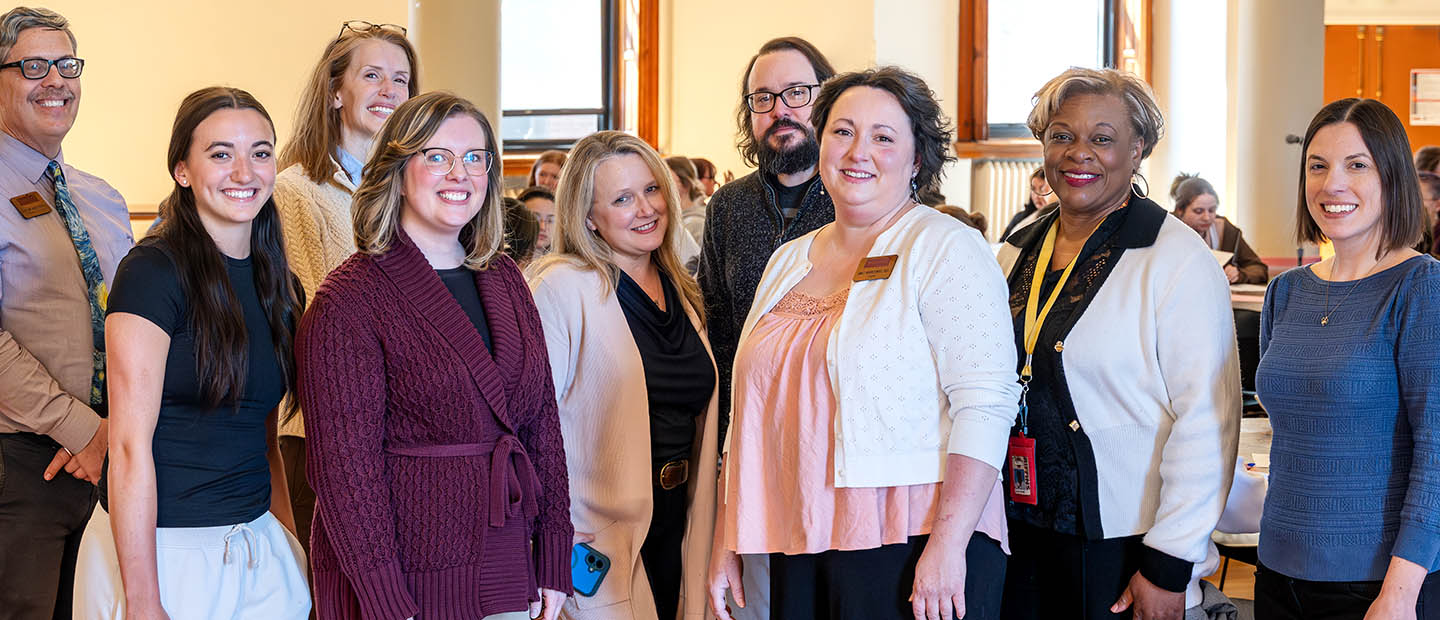
“The Ethics Bowl model involves providing students with a hypothetical case study that they can discuss and come to a resolution,” said Wierszewski. “Our case study this year was a farmer being asked to sell his land to an AI company so they could use it to construct a data center. Students had to weigh the pros (medical research advancement, job creation) with the cons (like impacts on water, waste, jobs, air pollution, etc.) and decide what the most ethical choice would be.”
Ultimately students from four classes came together to discuss the case study: Environment: Issues and Choices with Brzyski, International Business with Assistant Professor of Business Lyzona Marshall, Educational Foundations and School Law with Associate Professor of Education Daniel Casebeer, and Bible as Literature with Dean of the School of Humanities David von Schlichten.
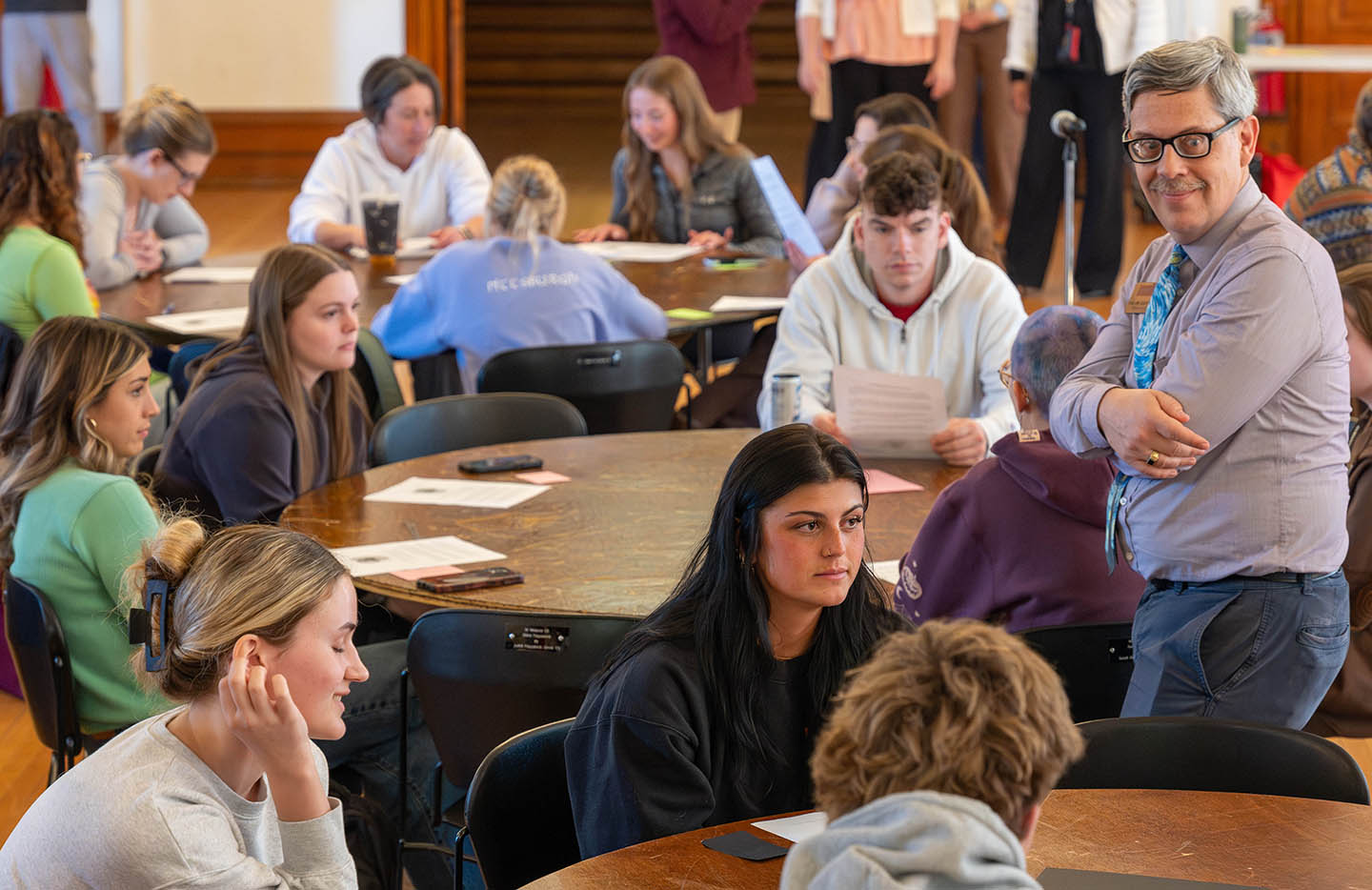
“We intentionally mixed the students up between classes to have a strong interdisciplinary discussion and there was a lot of robust discussion across majors with varying perspectives such as art, English, business, theology, criminal justice, etc.,” she added.
The students generally did not see the benefits of the data center, and discussed the impact on local resources such as water and energy, as well as the overall impact to the community, suggesting that perhaps the community should be part of the discussion. They also raised concerns about the long-term implications on jobs in arts and humanities if AI development continues to move forward without critical and ethical reflection on its impact.
Later that month, a second AI Ethics Bowl was held as part of Seton Hill’s Celebration of Scholarship. Students gathered together during lunch to discuss an updated case study that included a new detail of the data center being used primarily to house data for medical advances that would serve the community in healthcare. The students spent time in small groups working on a response before coming together to discuss their responses as a group.
Many of the participants during Celebration of Scholarship were students in Professor of Marketing and Communication Jen Jones’s Corporate Ethics class, and they continued their discussion the following day during their class time so that they could dive deeper into these ethical questions within their field.
“It was clear that students enjoyed hearing interdisciplinary perspectives on AI. These events helped students realize the value of multiple perspectives on AI and how professional and personal values ground our responses,” said Wierszewski. “It also was interesting how students commented that they were surprised to hear how many of their peers are critical of AI.”Seton Hill’s AI Advisory Council was initiated in the summer of 2024 in response to Wierszewski recognizing a need to have a representative body making AI decisions on campus as she had seen at other institutions. The interdisciplinary body includes representatives from each area of study, the library, Writing Center, Information Technology, and the Innovative Teaching & Learning Center, as well as two students.
The Council meets monthly and helps to create policies and programming for the University related to AI, including revising the Academic Integrity policy and creating the AI use scale that is used in syllabi. They also create and analyze a yearly survey of faculty, staff, and students about AI and have smaller working groups who tackle more specific projects, such as policies, programming, and a resource site.
In the upcoming academic year, Seton Hill, with the assistance of the AI Advisory Council, will be further integrating AI literacy into curriculum, and include a module on AI ethics in First Year Seminar courses. The Council is also looking to expand student membership on the AI Advisory Council and continue to offer thoughtful AI programming for students.