Art, Science Students Collaborate to Create 3D Medical Device Models
Associate Professor of Art Brian Ferrell and Assistant Professor of Biology Donna Haworth-Ward have been growing a relationship between his 3D Printing course and her Innovations in Health Science class over the last several years.
In the Innovations course, students identify a disease of interest with a gap in current treatments, diagnostics and/or quality of life and then develop an idea of how to fill that gap over the course of the semester. They then plan out tests and determine what the results of these tests might look like, including ideas for medical devices that could help address these gaps.
Conversations began in 2024 about working with the 3D printing students to create prototypes of these devices, resulting in a fall collaboration where Ferrell’s students were able to print a model of a proposed sensor that would predict the onset of migraines. Over the course of the next year, Haworth-Ward and Ferrell continued to work on a plan for the following fall, with Ferrell joining Haworth-Ward’s course as a guest speaker to talk about his work on 3D printing bendable joints for animal prosthetics.
As Ferrell has been developing the 3D printing course, he looks to incorporate a range of projects that show how 3D printing is being implemented in STEAM careers.
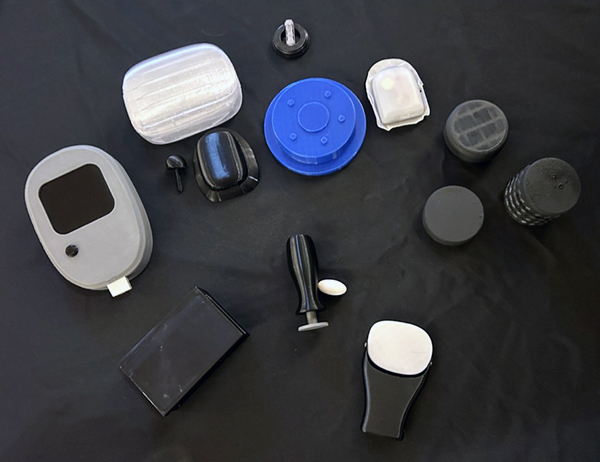 “We work through a lot of design based projects that are functional such as lighting, drinkware and jewelry design. Moving from those to medical devices is not a great leap because ultimately we are still designing objects with which we interact,” said Ferrell. “The students seemed apprehensive about designing a medical device at first because they were still learning how to use the CAD software. But once they started the project they were able to work through the iteration process pretty quickly.”
In the fall of 2025, the Innovations students were paired up with students in the 3D printing course after they completed their first paper and decided on a treatment for their disease of interest. The students from both classes worked together to discuss designs and finalize renditions of their innovations, with each Innovations in Health Science student being able to present a 3D prototype at their end of semester poster session.
“The feedback we received was great! The students enjoyed working together and were in awe of being able to hold their ideas in their hands,” Haworth-Ward said. “We look forward to enhancing our collaboration in the fall and emphasizing the connection between art and science.”
Ferrell and Haworth-Ward continue to find ways to enhance the collaboration and further connect their ideas. As the partnership enters its third fall, the 3D Printing and Innovations in Health Science courses will be running at the same time allowing for easier coordination between the two classes. Plans for fall 2026 include Innovations students visiting the printing lab, 3D printing students attending talks by Innovations guest speakers, and some joint sessions dedicated to working on plans for the devices. The 3D printing students will also be able to make and present posters on the design and fabrication process alongside the Innovations students at the end of semester poster session.